
The Federal Cloud’s Balancing Act
 by: Michael Cardaci
August 21, 2026

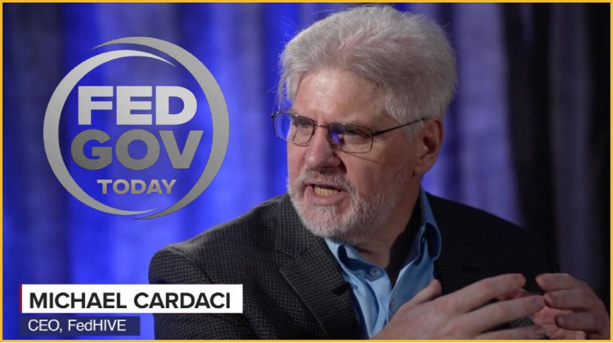
I recently sat down with Fed Gov Today at the Carahsoft Summit on FedRAMP to talk about a challenge facing every federal technology leader: How do you balance security, performance, and cost as agencies modernize their technology environments?
It is tempting to think of these priorities as competing objectives—that you can maximize two but inevitably have to sacrifice the third. I believe the federal government needs to approach the equation differently. The goal isn’t to pick two. It’s to understand the mission and determine where each workload belongs on the spectrum of security, performance, and cost.
There is no universal security posture
Not all government data carries the same level of risk. Some information requires the strongest available protections. Other information may present significantly less risk if compromised. That means agencies shouldn’t start with a predetermined technology environment or security level. They should start with the mission.
One way to think about that decision is to consider both how many people could be affected and the potential severity of the impact. A relatively small dataset could have enormous consequences for the individuals whose information it contains. Conversely, a system could affect a large population while presenting a more moderate level of risk.
Those factors should help mission owners determine the appropriate security posture—and the right combination of infrastructure, performance, and cost. This becomes especially important as agencies accelerate modernization and move more workloads to the cloud.
Cloud modernization changes the equation
The push to bring more innovation into government and make greater use of commercial technology creates tremendous opportunities. But federal agencies operate under different circumstances than most commercial organizations. The government holds enormous amounts of information about U.S. citizens and operates services on which people depend. Its tolerance for mistakes is understandably limited.
As agencies consider where workloads should reside, they need to look across the entire technology portfolio. How much belongs on premises? How much should be in a private cloud? How much can appropriately move to a commercial hyperscaler?
There isn’t one right answer. Each environment creates a different combination of security, flexibility, performance, and cost. The objective should be to make deliberate choices based on the mission and the consequences of failure.
The cloud is no longer just a place to store data
The federal government’s relationship with the cloud has changed dramatically over the past 10 to 15 years. Early cloud adoption was often about moving and storing data. Today, the cloud is where people work. Applications, workflows, and operational data increasingly live in cloud environments. Federal employees and contractors are accessing those systems from government facilities, homes, and remote locations.
That fundamentally changes the security challenge. When the cloud was primarily a repository, agencies could think about protecting the data inside a relatively defined perimeter. Today, security has to account for people, identities, devices, applications, connections, and all the activity surrounding that data.
AI and automation add another dimension. Technology changes quickly, and new vulnerabilities and attack methods are emerging pretty much daily at this point. Organizations can’t assume that controls developed several years ago will continue to provide sufficient protection indefinitely. Security has to be an ongoing process, not a one-time destination.
Moving toward compliant security operations
One encouraging development is the evolution of FedRAMP toward a more continuous understanding of security posture. A point-in-time assessment doesn’t fully reflect how modern cloud environments can show the security maturity of an organization—that you have the fundamentals—but doesn’t fully reflect what is happening day-to-day. And this is where vulnerabilities need to be caught so they can be addressed in real-time. Systems change. Vulnerabilities emerge. Applications are updated. Users and access patterns evolve. Agencies need to understand their risk posture as those changes occur.
The move toward continuous monitoring is an important step. The goal should be to understand security health as close to real time as the mission and risk require, and to make compliance and accountability processes better reflect operational reality.
Some friction is necessary. The wrong friction isn’t.
We hear the word “friction” a lot when discussing federal technology and security. There will always be some friction in government. Agencies have to vet providers, protect sensitive information, and continuously monitor the environments they authorize. Every new technology or service introduces another element that must be understood and secured. That responsibility isn’t going away—and it shouldn’t.
The real question is whether the friction we’re experiencing is producing meaningful security or simply the result of processes that are slower than they need to be. Government and industry should keep looking for ways to make security evaluations and authorization processes faster. But speed can’t come at the expense of understanding what is being introduced into a federal environment.
Look beyond documented security
That brings me to what I believe is one of the most important considerations for federal technology leaders: the difference between documented security and operational security. A provider can produce documentation demonstrating that it met a set of requirements. That’s important. But documentation alone doesn’t tell the whole story.
Federal leaders should also ask: What is the organization actually doing? Is it monitoring its systems? Anticipating emerging threats? Proactively identifying where its security posture needs to improve? Engaging with government customers about what is changing and what they should be thinking about next?
Security is not about paying lip service to compliance in order to secure a lucrative contract. The strongest technology partners aren’t waiting for requirements to be established. At FedHIVE, we are working proactively with government agencies to understand how each agency will define its unique needs and requirements and what they will look for from technology partners to document continuous compliance.
We want our partners to be able to speak confidently with government customers and say, “Here’s what we’re seeing, here’s where we’re going, and here’s how we’re preparing for what’s next.”
Keep the mission at the center
My conversation with FedGov Today reinforced something I believe strongly: The federal government shouldn’t have to choose between security, performance, and cost as if there is one universal answer. The right balance will be different for every mission, workload and set of data—and it may change over time. The goal is to understand the mission, understand the consequences of failure, understand the data, and then make an informed decision about the appropriate technology and security posture.
Government and industry both have a role to play. Agencies need to clearly define and evaluate their requirements. Technology providers need to understand how federal customers actually use technology and remain proactive as those needs evolve. Ultimately, modernization isn’t about moving faster simply for the sake of moving faster. It’s about moving at the right speed while maintaining the level of security the mission demands.
That’s the balance the federal cloud requires—and it’s a balance we should continue working toward together.
I recently sat down with Fed Gov Today at the Carahsoft Summit on FedRAMP to talk about a challenge facing every federal technology leader: How do you balance security, performance, and cost as agencies modernize their technology environments?
It is tempting to think of these priorities as competing objectives—that you can maximize two but inevitably have to sacrifice the third. I believe the federal government needs to approach the equation differently. The goal isn’t to pick two. It’s to understand the mission and determine where each workload belongs on the spectrum of security, performance, and cost.
There is no universal security posture
Not all government data carries the same level of risk. Some information requires the strongest available protections. Other information may present significantly less risk if compromised. That means agencies shouldn’t start with a predetermined technology environment or security level. They should start with the mission.
One way to think about that decision is to consider both how many people could be affected and the potential severity of the impact. A relatively small dataset could have enormous consequences for the individuals whose information it contains. Conversely, a system could affect a large population while presenting a more moderate level of risk.
Those factors should help mission owners determine the appropriate security posture—and the right combination of infrastructure, performance, and cost. This becomes especially important as agencies accelerate modernization and move more workloads to the cloud.
Cloud modernization changes the equation
The push to bring more innovation into government and make greater use of commercial technology creates tremendous opportunities. But federal agencies operate under different circumstances than most commercial organizations. The government holds enormous amounts of information about U.S. citizens and operates services on which people depend. Its tolerance for mistakes is understandably limited.
As agencies consider where workloads should reside, they need to look across the entire technology portfolio. How much belongs on premises? How much should be in a private cloud? How much can appropriately move to a commercial hyperscaler?
There isn’t one right answer. Each environment creates a different combination of security, flexibility, performance, and cost. The objective should be to make deliberate choices based on the mission and the consequences of failure.
The cloud is no longer just a place to store data
The federal government’s relationship with the cloud has changed dramatically over the past 10 to 15 years. Early cloud adoption was often about moving and storing data. Today, the cloud is where people work. Applications, workflows, and operational data increasingly live in cloud environments. Federal employees and contractors are accessing those systems from government facilities, homes, and remote locations.
That fundamentally changes the security challenge. When the cloud was primarily a repository, agencies could think about protecting the data inside a relatively defined perimeter. Today, security has to account for people, identities, devices, applications, connections, and all the activity surrounding that data.
AI and automation add another dimension. Technology changes quickly, and new vulnerabilities and attack methods are emerging pretty much daily at this point. Organizations can’t assume that controls developed several years ago will continue to provide sufficient protection indefinitely. Security has to be an ongoing process, not a one-time destination.
Moving toward compliant security operations
One encouraging development is the evolution of FedRAMP toward a more continuous understanding of security posture. A point-in-time assessment doesn’t fully reflect how modern cloud environments can show the security maturity of an organization—that you have the fundamentals—but doesn’t fully reflect what is happening day-to-day. And this is where vulnerabilities need to be caught so they can be addressed in real-time. Systems change. Vulnerabilities emerge. Applications are updated. Users and access patterns evolve. Agencies need to understand their risk posture as those changes occur.
The move toward continuous monitoring is an important step. The goal should be to understand security health as close to real time as the mission and risk require, and to make compliance and accountability processes better reflect operational reality.
Some friction is necessary. The wrong friction isn’t.
We hear the word “friction” a lot when discussing federal technology and security. There will always be some friction in government. Agencies have to vet providers, protect sensitive information, and continuously monitor the environments they authorize. Every new technology or service introduces another element that must be understood and secured. That responsibility isn’t going away—and it shouldn’t.
The real question is whether the friction we’re experiencing is producing meaningful security or simply the result of processes that are slower than they need to be. Government and industry should keep looking for ways to make security evaluations and authorization processes faster. But speed can’t come at the expense of understanding what is being introduced into a federal environment.
Look beyond documented security
That brings me to what I believe is one of the most important considerations for federal technology leaders: the difference between documented security and operational security. A provider can produce documentation demonstrating that it met a set of requirements. That’s important. But documentation alone doesn’t tell the whole story.
Federal leaders should also ask: What is the organization actually doing? Is it monitoring its systems? Anticipating emerging threats? Proactively identifying where its security posture needs to improve? Engaging with government customers about what is changing and what they should be thinking about next?
Security is not about paying lip service to compliance in order to secure a lucrative contract. The strongest technology partners aren’t waiting for requirements to be established. At FedHIVE, we are working proactively with government agencies to understand how each agency will define its unique needs and requirements and what they will look for from technology partners to document continuous compliance.
We want our partners to be able to speak confidently with government customers and say, “Here’s what we’re seeing, here’s where we’re going, and here’s how we’re preparing for what’s next.”
Keep the mission at the center
My conversation with FedGov Today reinforced something I believe strongly: The federal government shouldn’t have to choose between security, performance, and cost as if there is one universal answer. The right balance will be different for every mission, workload and set of data—and it may change over time. The goal is to understand the mission, understand the consequences of failure, understand the data, and then make an informed decision about the appropriate technology and security posture.
Government and industry both have a role to play. Agencies need to clearly define and evaluate their requirements. Technology providers need to understand how federal customers actually use technology and remain proactive as those needs evolve. Ultimately, modernization isn’t about moving faster simply for the sake of moving faster. It’s about moving at the right speed while maintaining the level of security the mission demands.
That’s the balance the federal cloud requires—and it’s a balance we should continue working toward together.
Watch Michael’s interview with Fed Gov Today